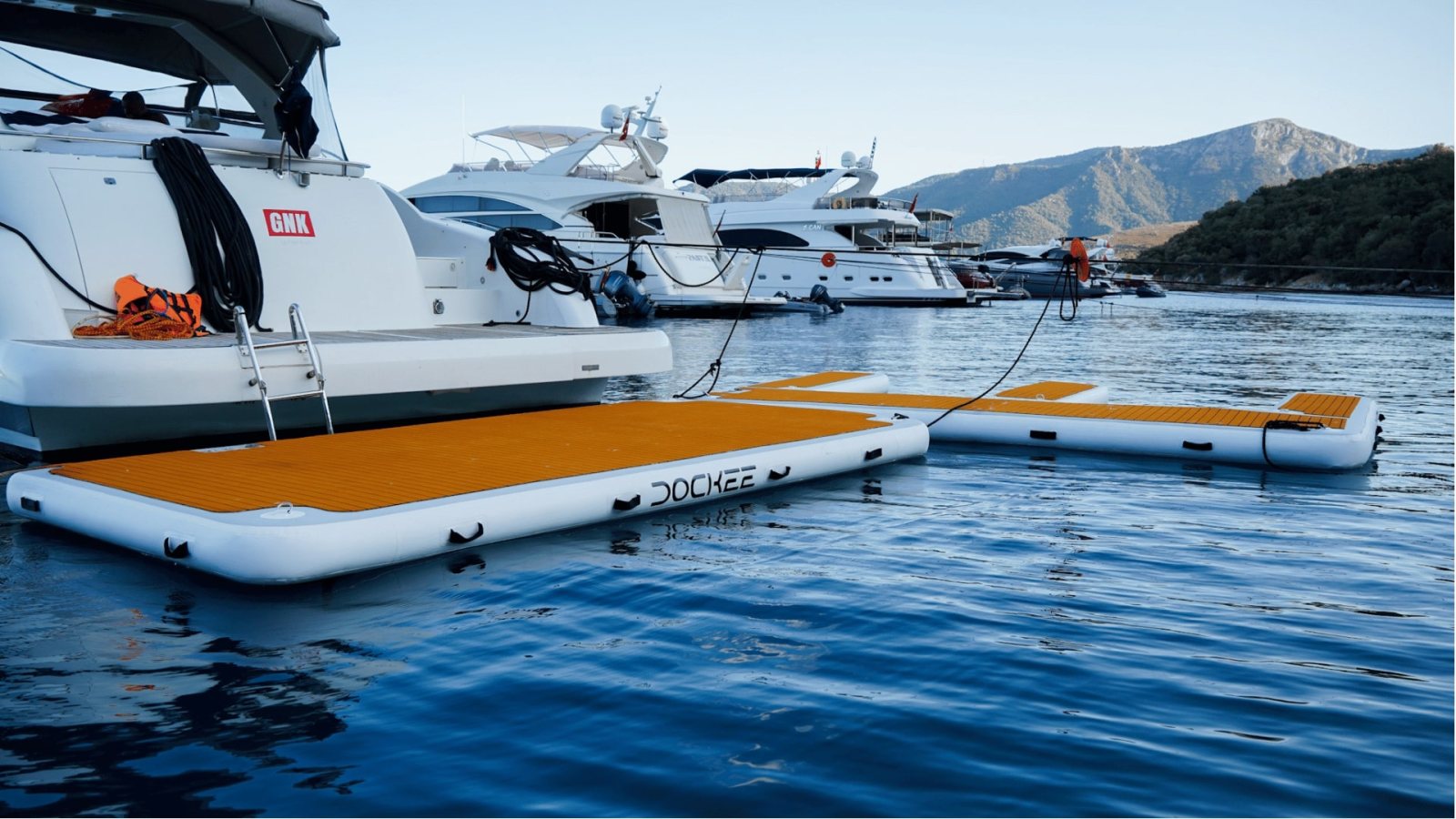
A good winter berth in Liguria is one that is properly sheltered from the south-west, where the worst winter swell comes from, and that sits within reach of working boatyards and services. The Gulf of La Spezia and the big harbour basins of Genoa tick both boxes, which is why so many boats spend the cold months there.
The coast in between is beautiful but less forgiving. Many of the small harbours of the Riviera face south into open water, and a berth that is charming in July can be an anxious place in a January gale.
Shelter first
The Ligurian Sea is at its roughest when the libeccio, the south-westerly, blows across a long stretch of open water and drives swell straight onto a coast that faces south. Harbours whose entrances open to the south or south-west take the brunt of it. The storm at the end of October 2018, which broke the breakwater at Rapallo and wrecked a great many of the boats inside, is still the example everyone on this coast remembers.
So the first question for any winter berth is where the swell goes when the libeccio blows. Look at which way the harbour entrance faces, how high the outer breakwater stands and how much surge reaches the inner pontoons. Ask the marina office, and then ask the crews who wintered there last year, because they will tell you which pontoons move and which stay still.
The Gulf of La Spezia is the model of shelter on this coast. A long breakwater across its mouth, together with the headlands at Portovenere and Lerici, keeps the open sea out, and inside there is a choice of berths, from the large modern basin at Porto Mirabello close to the town centre to the smaller harbours at Le Grazie and Fezzano on the western shore.
Services and yards nearby
A winter berth is rarely just a place to sit. It is where antifouling, engine servicing, canvas repairs and new electronics happen before spring, and having yards and specialist trades close by saves a great deal of time and towing. La Spezia has one of the densest clusters of yacht builders and refit yards in the Mediterranean, spread around the gulf from the town to Muggiano, which makes it a natural choice for a boat with a long job list.
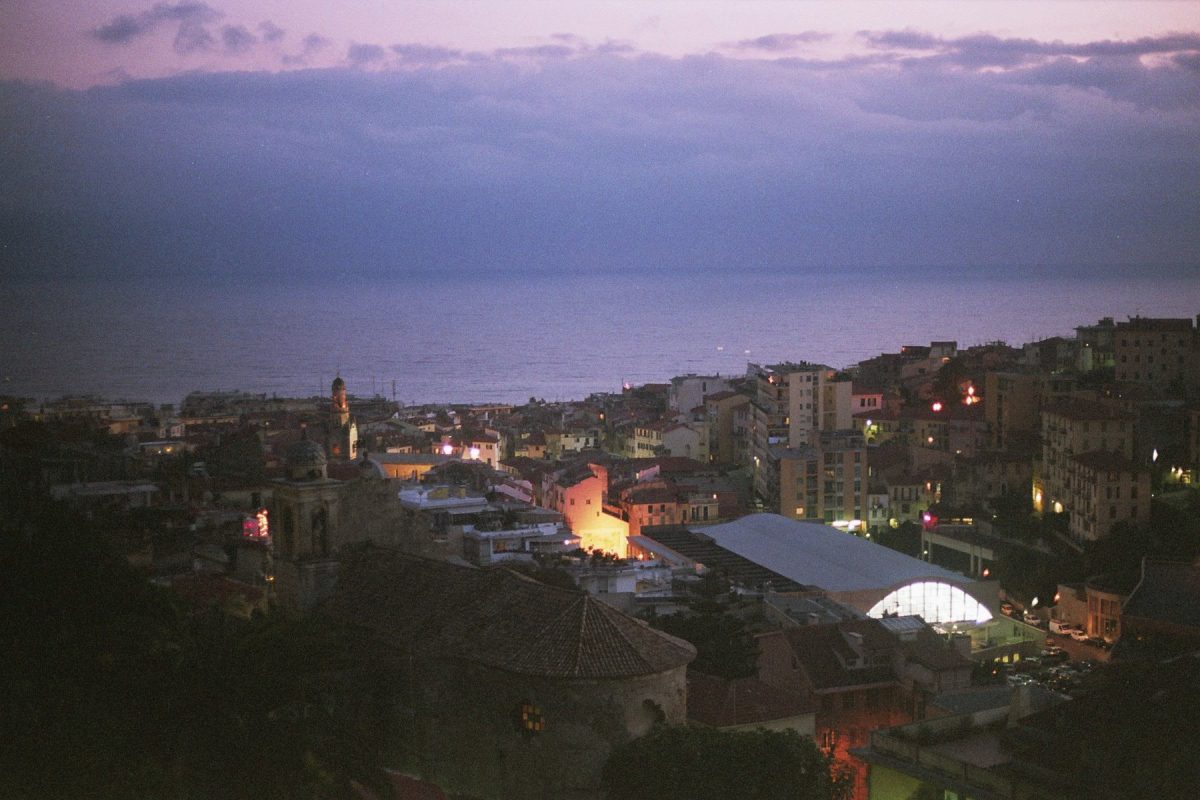
Genoa offers a different kind of convenience. The port is huge and well protected, with marinas in the Porto Antico at the heart of the old city and a large marina further west beside the airport, while refit yards around the port work on superyachts right through the winter. Crews living aboard get a real city on the doorstep, with trains, hospitals and flights home, which counts for a lot by February.
Beyond the yards, look at the everyday details: shore power that stays on in a storm, water on the pontoon through the cold months, decent security, a chandlery within walking distance and somewhere dry ashore to keep gear. Those small things decide whether a winter afloat feels like a home or a chore.
Toys over the winter months
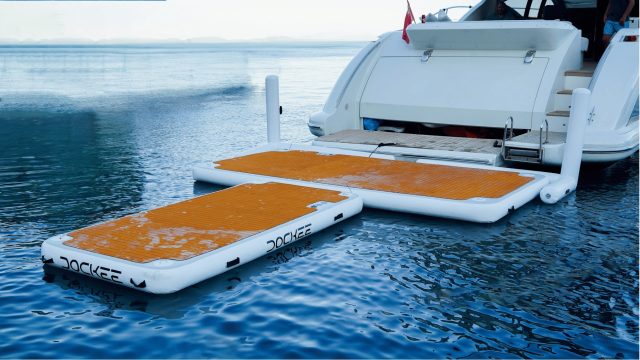
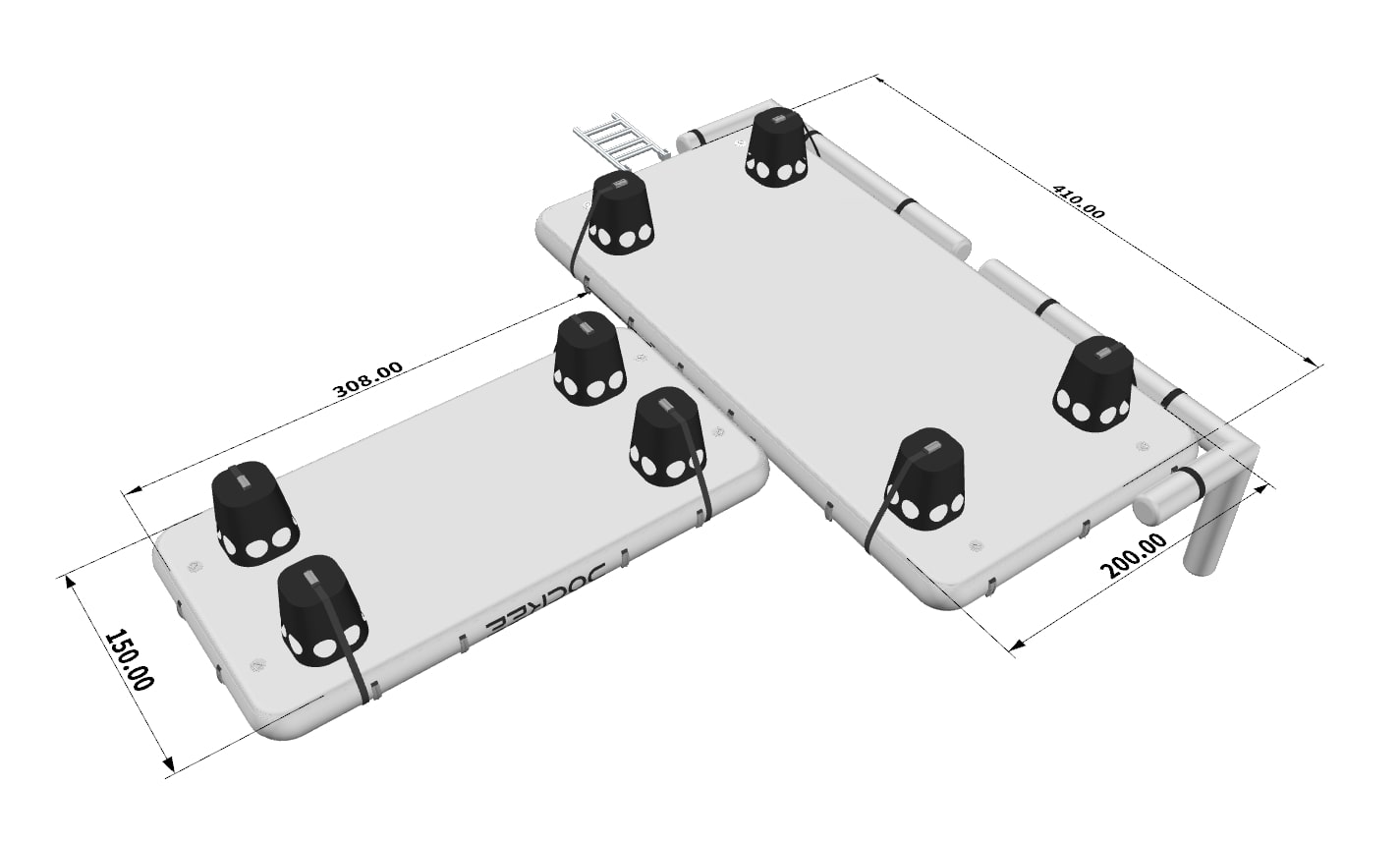
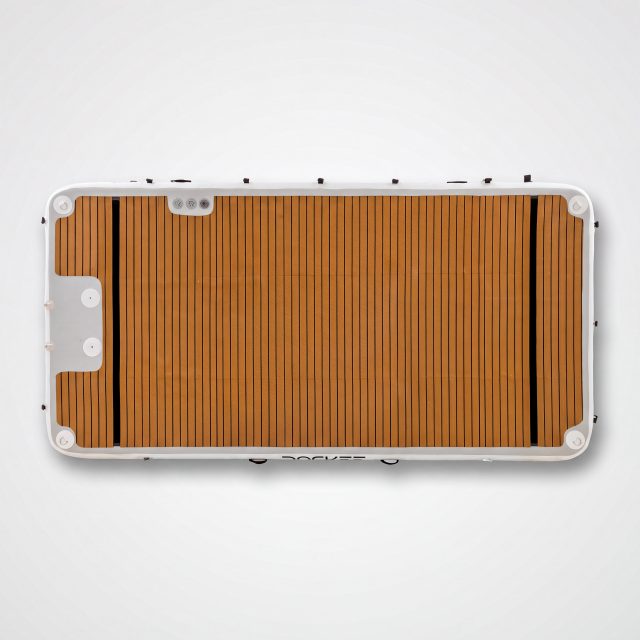
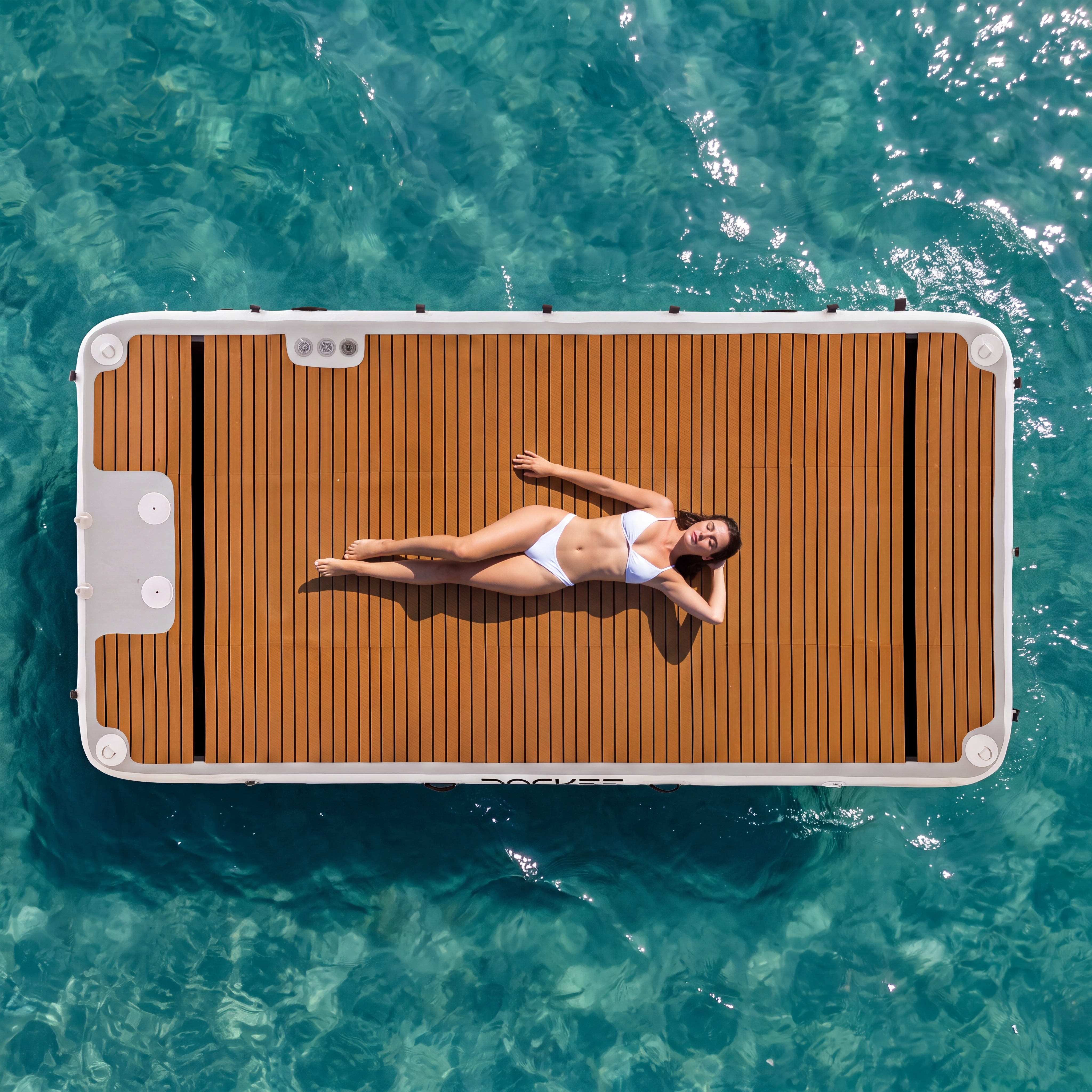
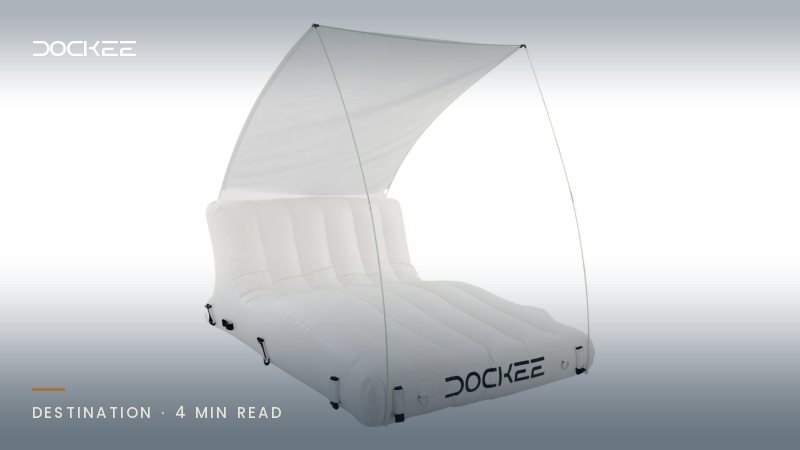
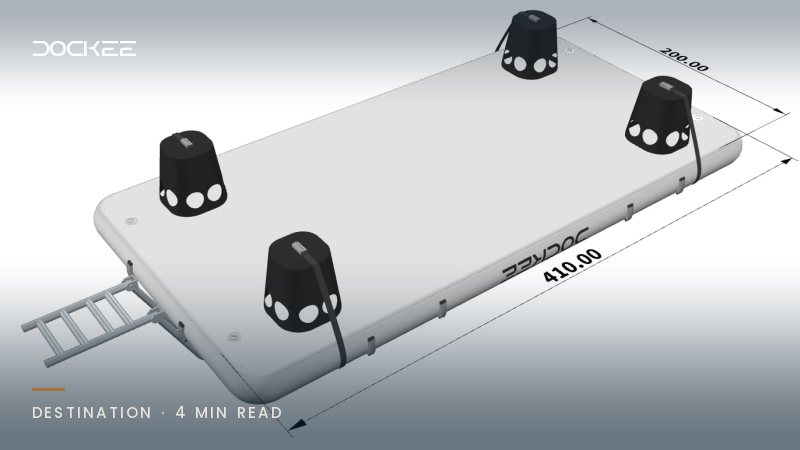
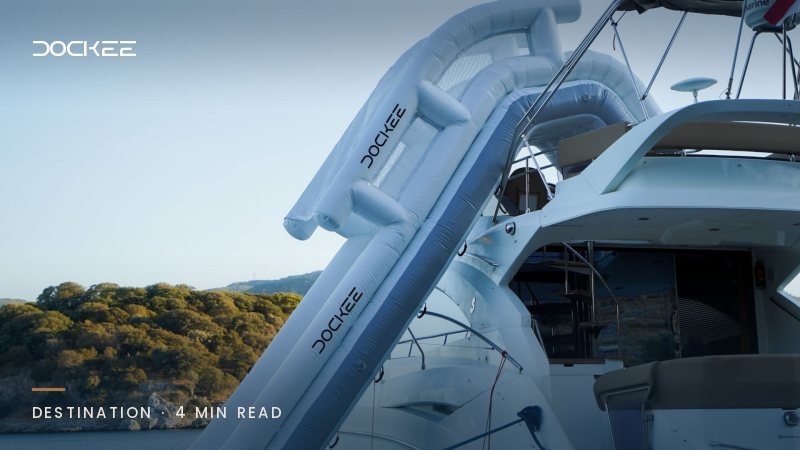
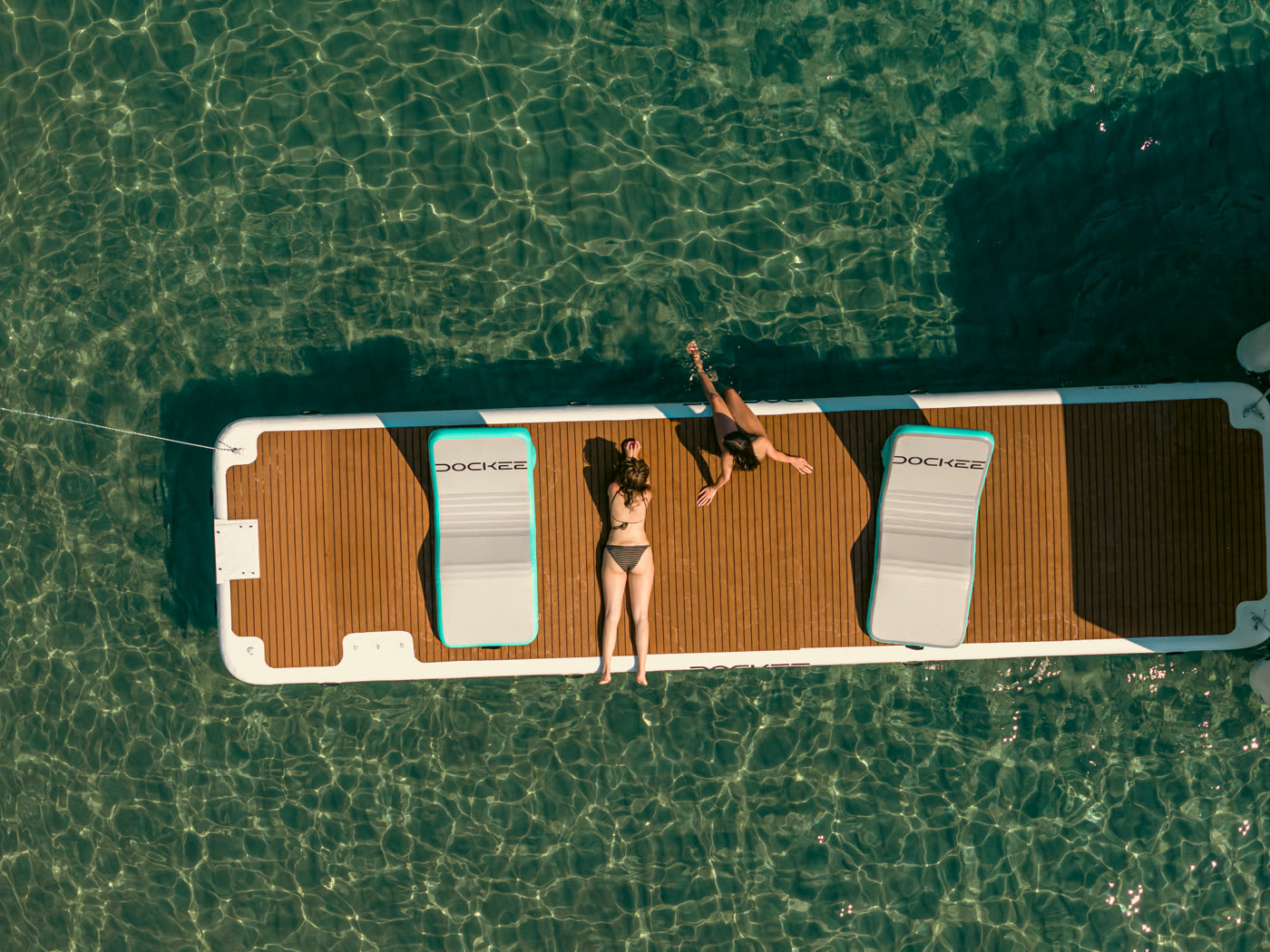
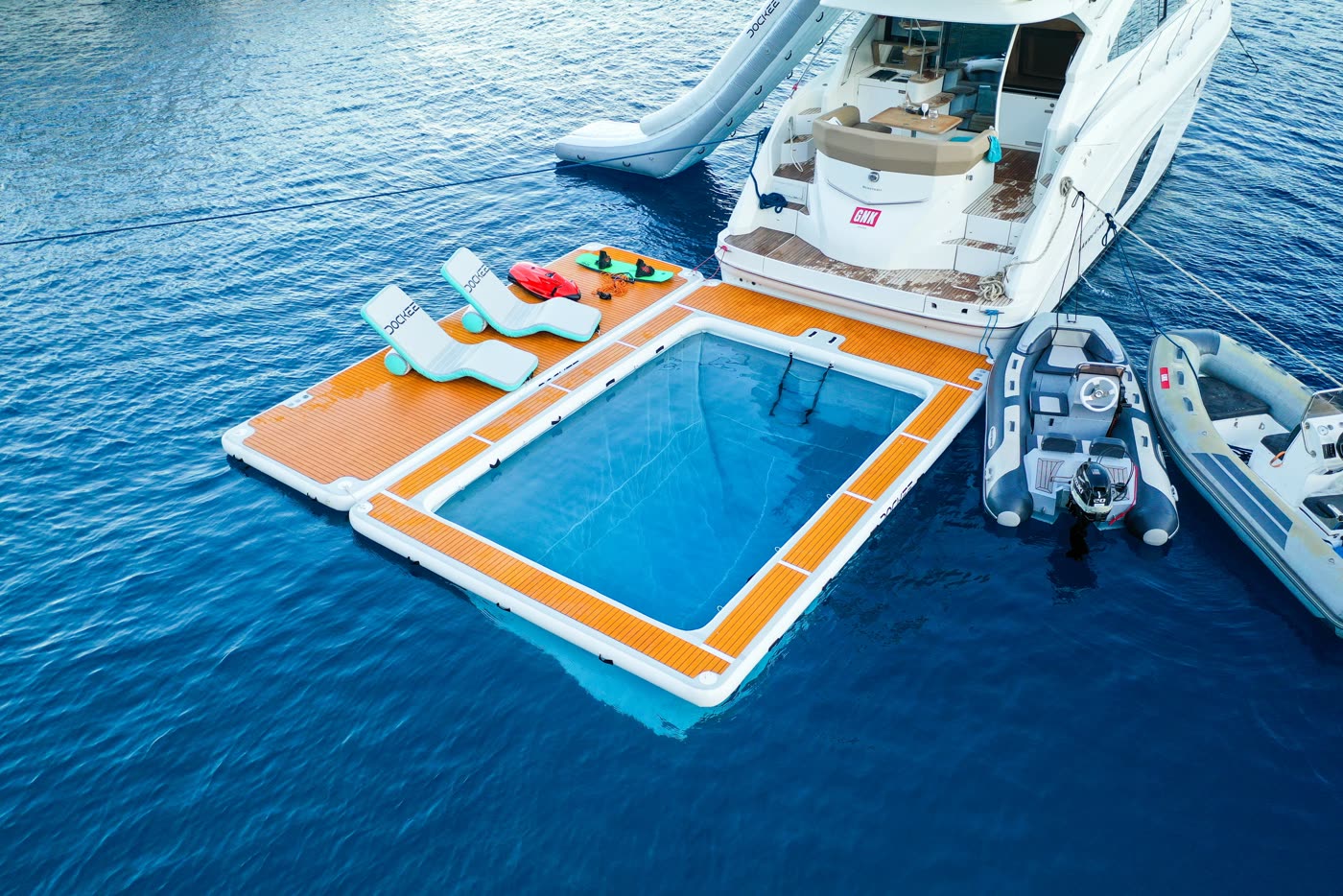
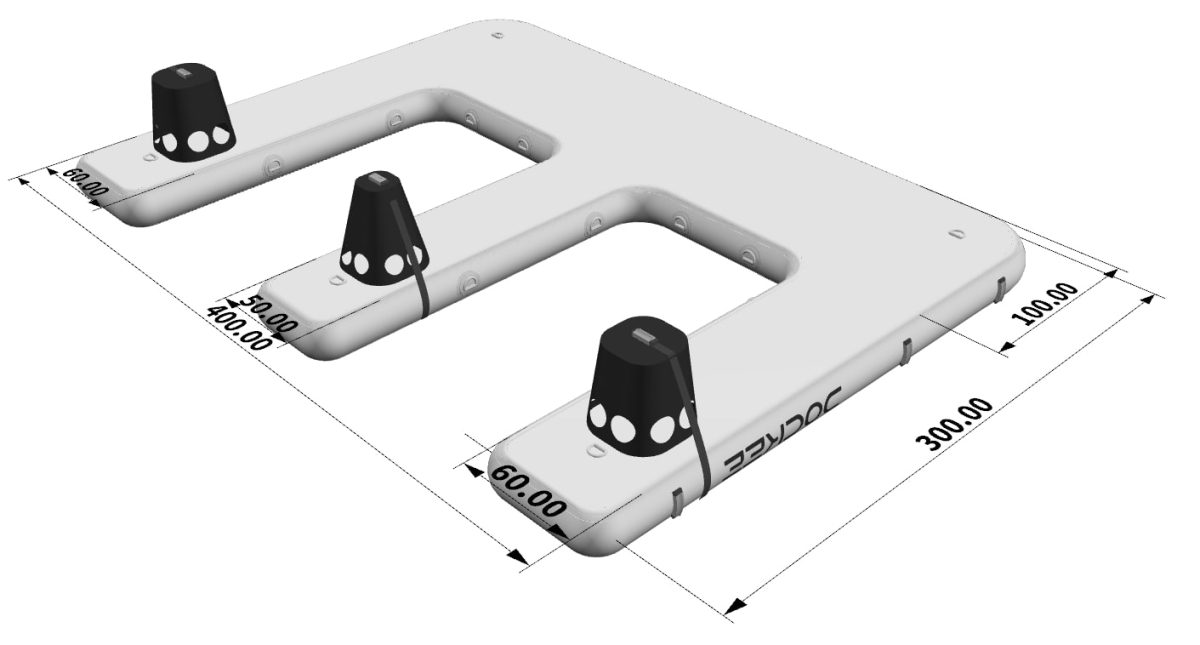
Water toys do not belong on deck through a Ligurian winter. A Double Toy Dock, a 410 x 205 cm main deck with a 308 x 155 cm secondary module, spends the summer holding up to two jet skis off the stern; in winter it should be deflated, dried and packed away. A Premium Teak Platform 4.10 m, the 410 x 205 cm deck that does duty as a swim platform all season, belongs in its bag too.
Let each piece dry completely before it is folded, then keep the bags somewhere dry, off the floor and away from heaters. A marina storeroom or a corner of the yard shed is better than a damp lazarette, where condensation does the damage. Our buying guide has a care and storage section with the details, and every one of the floating platforms packs away in the same way.
When the boat goes back in the water, the toys come out of their bags ready to inflate, which matters when the first fine Saturday in April turns up before the job list is finished.
Photo credits