The lighthouse at Santa Maria di Leuca stands on the last high ground of the heel of Italy, and from the terrace by the basilica beside it you look out over two seas. The Adriatic runs away north-east towards Castro and Otranto; the Ionian curves west towards Gallipoli. People in Leuca will tell you that on certain still days a line shows on the water where the two meet, one side a shade darker than the other. Geographers are less romantic about it, but anyone planning a Salento yacht charter soon finds that the two coasts behave like different places.
Two seas at the tip of the heel
The Adriatic side is the dramatic one. North of Leuca the coast is limestone cliff, cut by sea caves and narrow inlets: the Zinzulusa cave near Castro, the deep gash of the Ciolo where swimmers jump from the rocks under the road bridge, the little harbour at Tricase Porto where fishing boats are still pulled up on the slip. Otranto sits further up, a walled town with an Aragonese castle and a cathedral whose entire nave floor is a mosaic of a great tree of life, carried on the backs of elephants, with kings, beasts and monsters among its branches. In November the bastions are empty and the harbour holds mostly working boats.
The Ionian side is lower and softer. West of Leuca the cliffs give way to long stretches of shallow, sandy water around Pescoluse, the beaches that local brochures like to call the Maldives of Salento, and then to Gallipoli, whose old town sits on an island joined to the mainland by a bridge. Further north still is Porto Cesareo, with its marine protected area and a scattering of low islets. The water here is famously clear, the kind that shows every ripple of sand under a boat at anchor.
Always a lee somewhere
This is the practical gift of the Salento. With two coasts facing in almost opposite directions, a wind that makes one side uncomfortable usually leaves the other sheltered. A north-westerly maestrale sends swell down the Ionian shore but leaves the coves under the Adriatic cliffs flat. When the scirocco comes up from the south-east, the Ionian bays around Gallipoli are the ones to head for. A tramontana from the north puts the south-facing water off Leuca itself in the lee.
A skipper who knows the coast plans each day around this rather than around a fixed itinerary, and the hops are short enough that changing sides costs a morning rather than a day. Leuca, with its marina right at the tip, is the natural hinge between the two. Before anchoring anywhere, check the local rules, particularly around Porto Cesareo and the other protected stretches, where special restrictions apply.
A slide into deep clear water
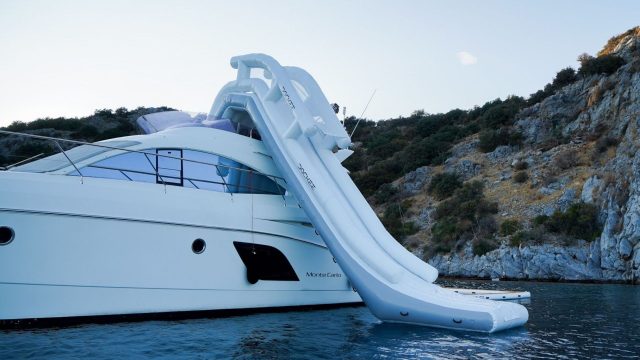
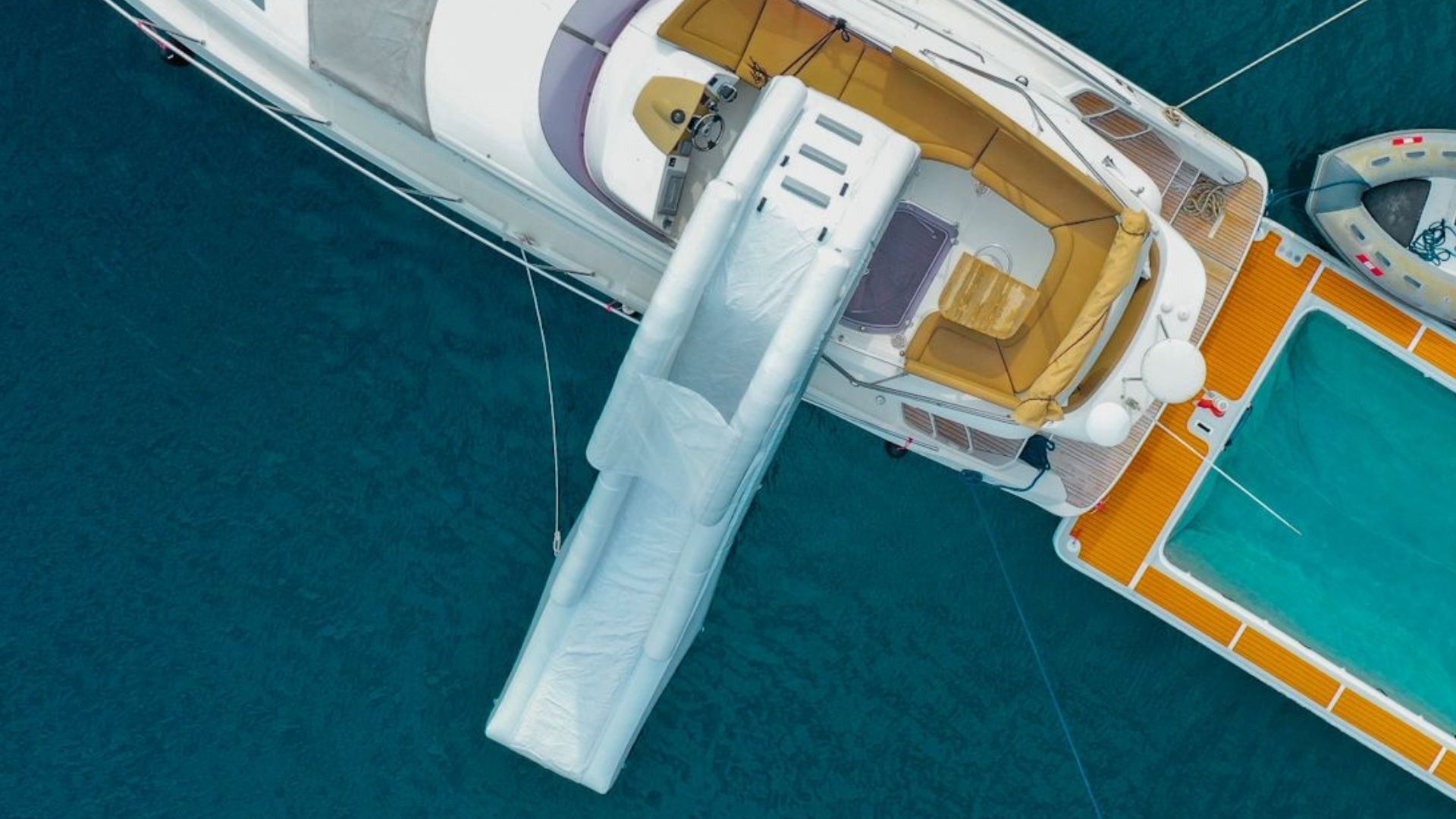
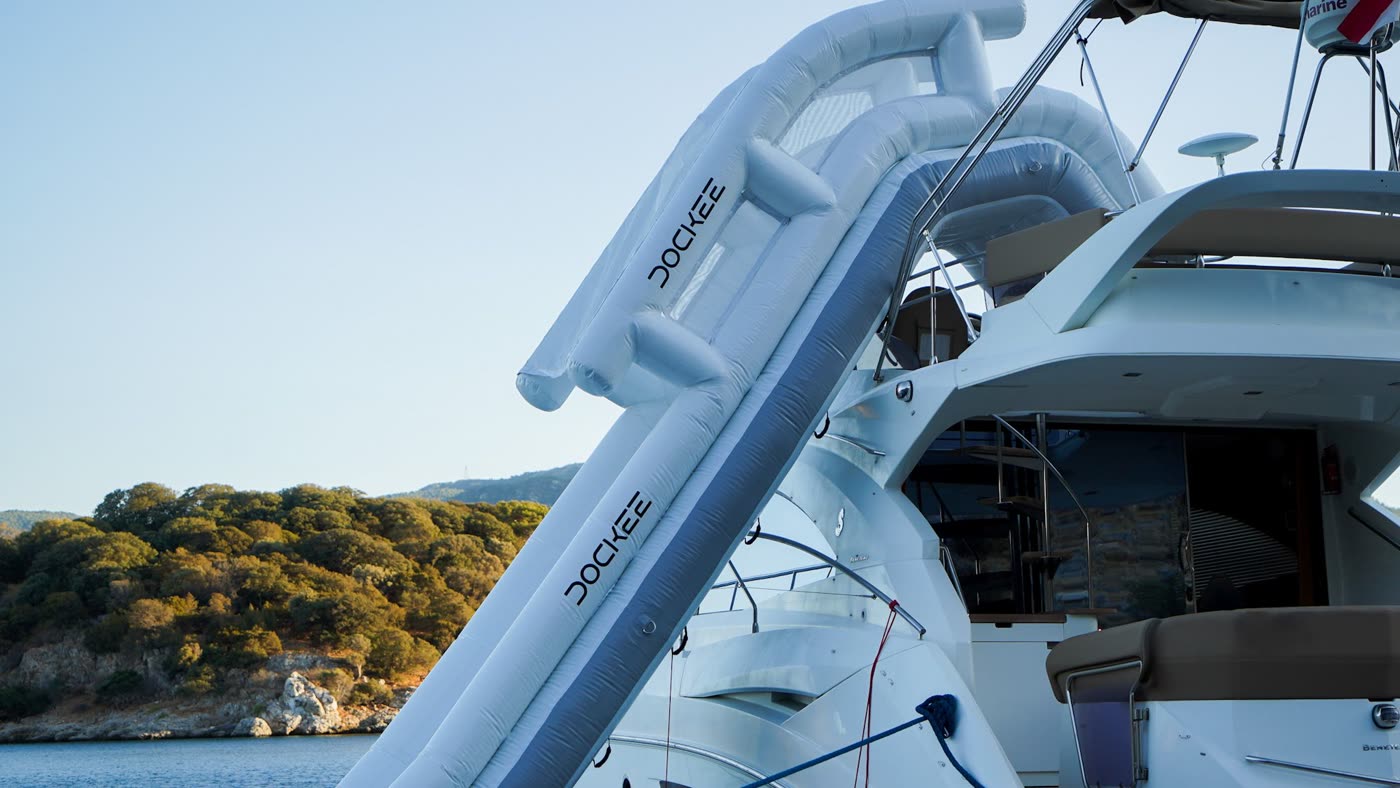
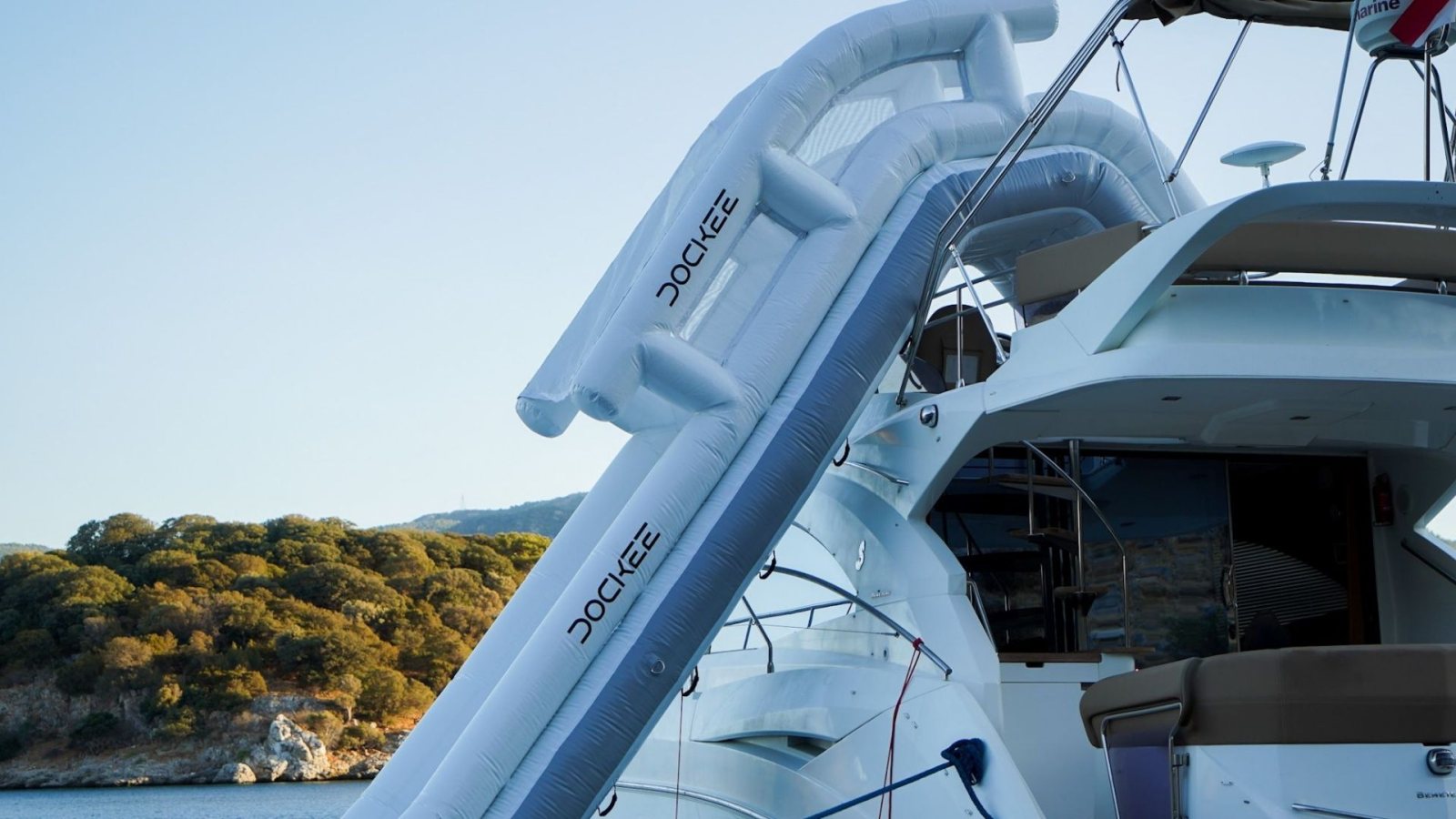
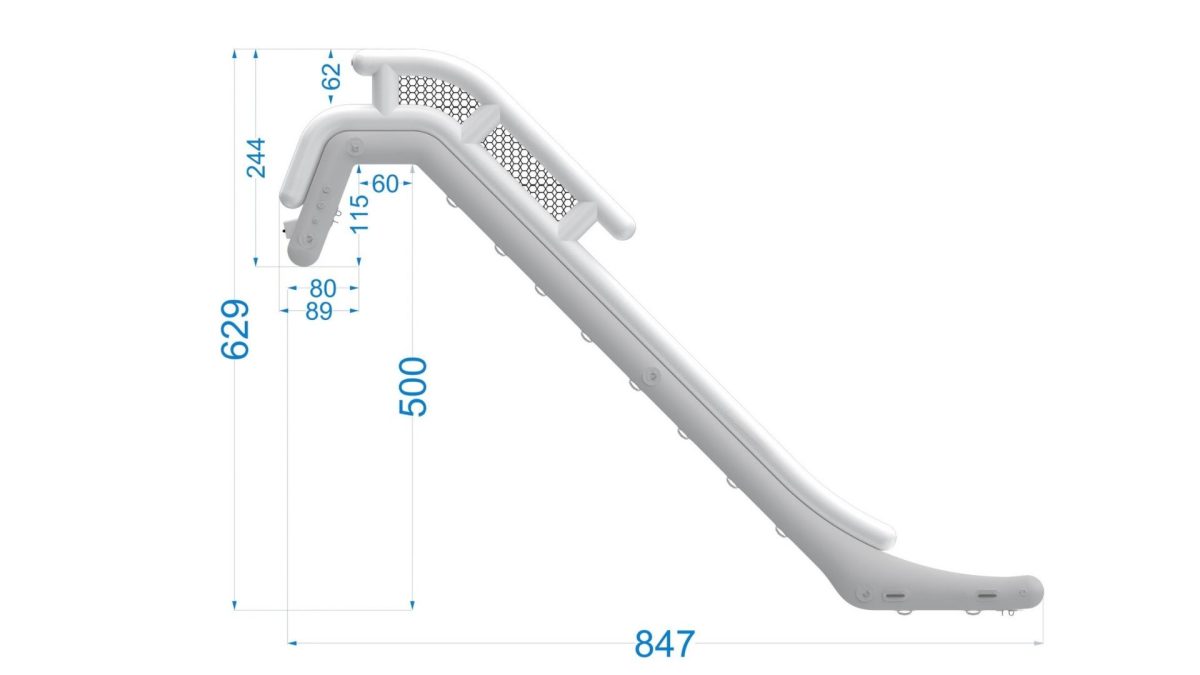
The coves below the Adriatic cliffs drop away quickly, and that deep, clear water is exactly what a yacht slide needs. An Aqua Yachtslides 270-350 cm rises to about 365 cm at its highest point and sends swimmers down roughly 484 cm of slide, into water so transparent you can follow them all the way under. By evening it has filled everyone's phone, and here the backdrop is a cliff with a cave mouth in it.
Rig it only at anchor and in calm conditions. The engines and thrusters stay off until the last swimmer is back aboard, someone on deck watches the swimmers, children above all, and the end of the slide must sit over deep water clear of rocks. The mooring and safety section of our buying guide lists the checks before the first run. The full range of yacht slides runs to taller sizes for higher decks.
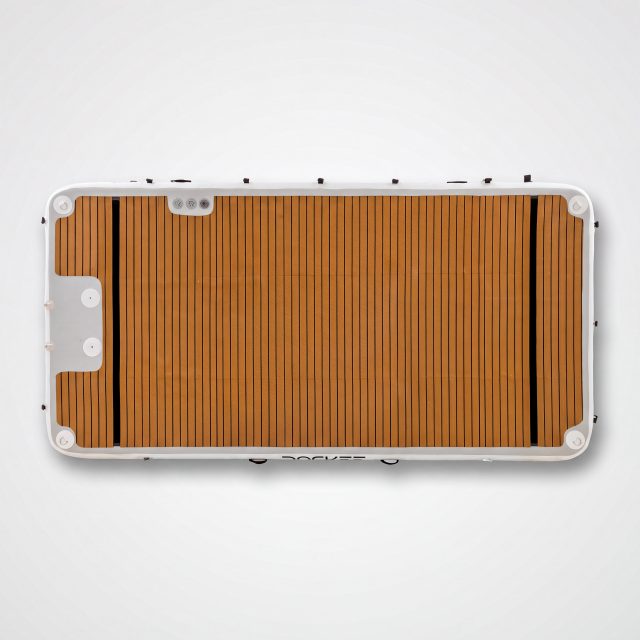
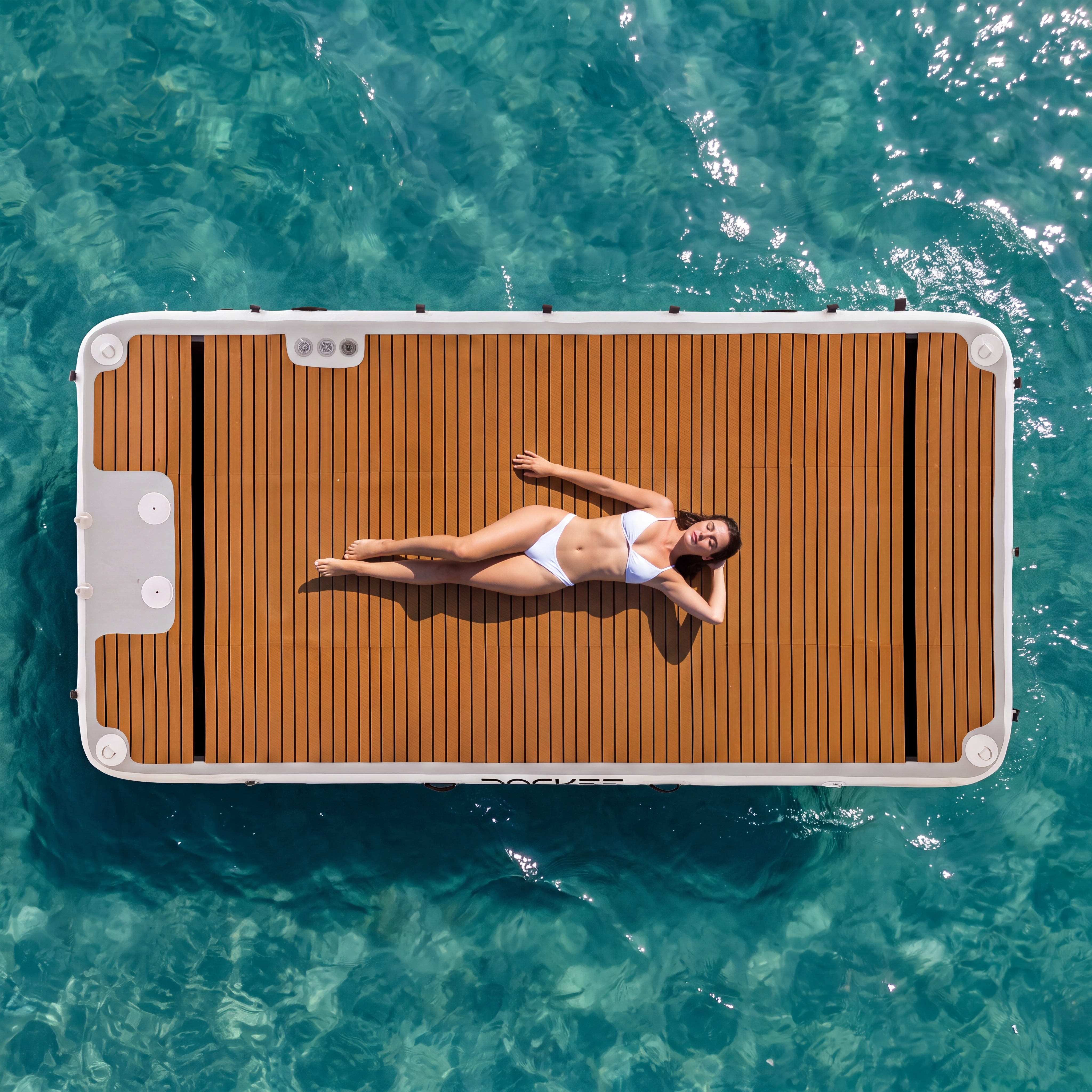
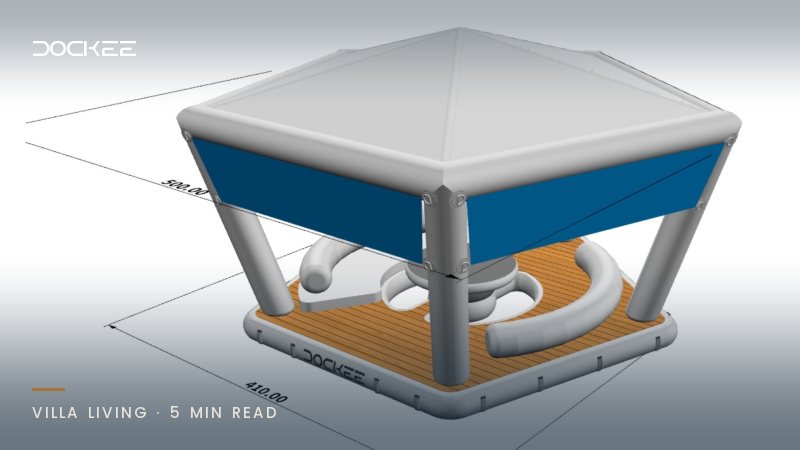
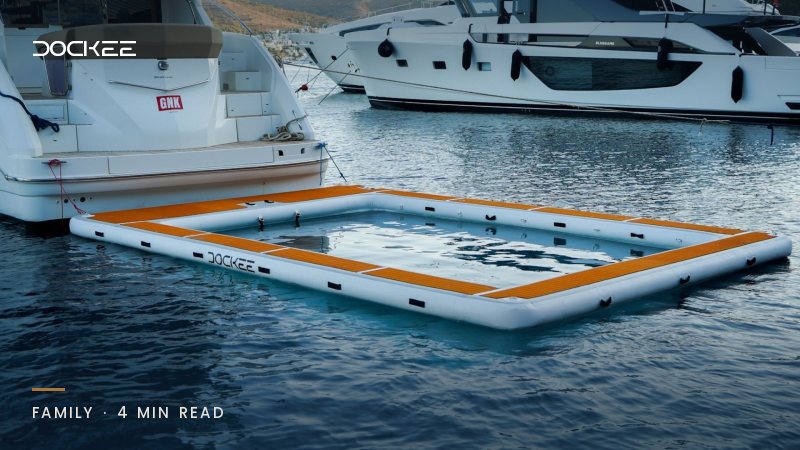
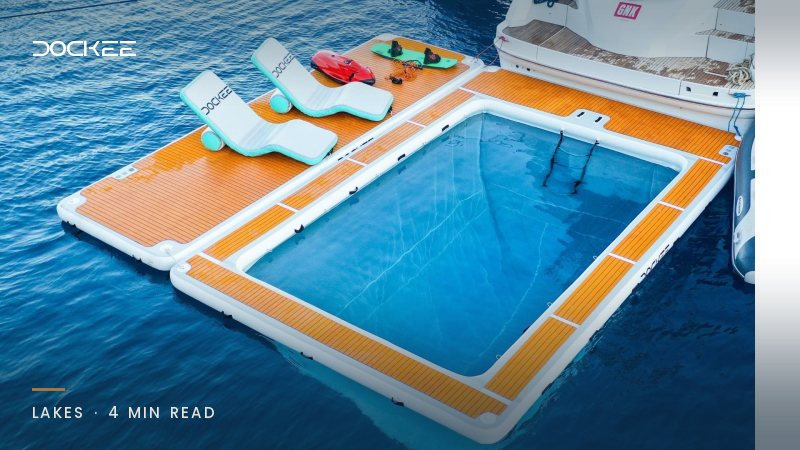
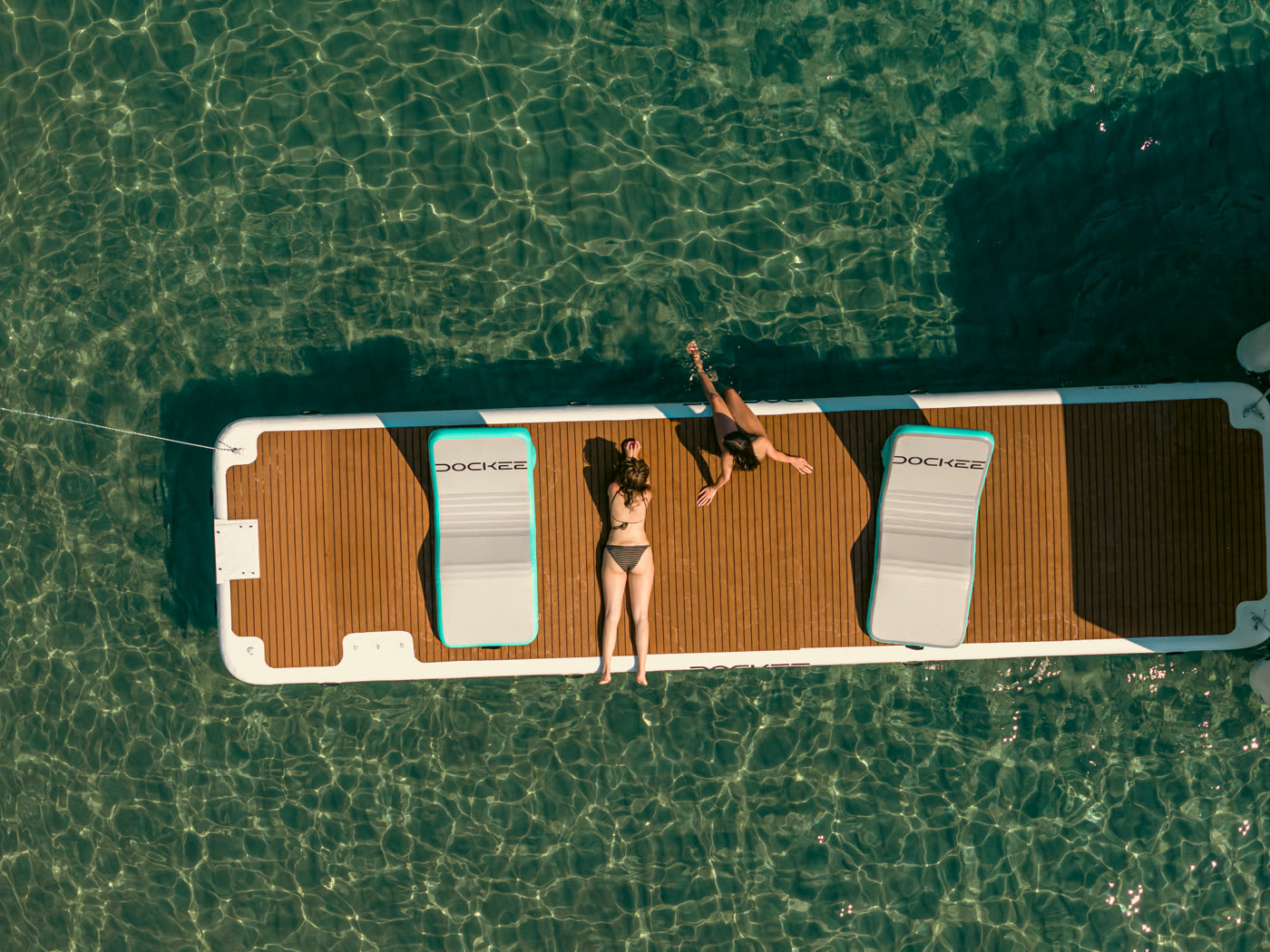
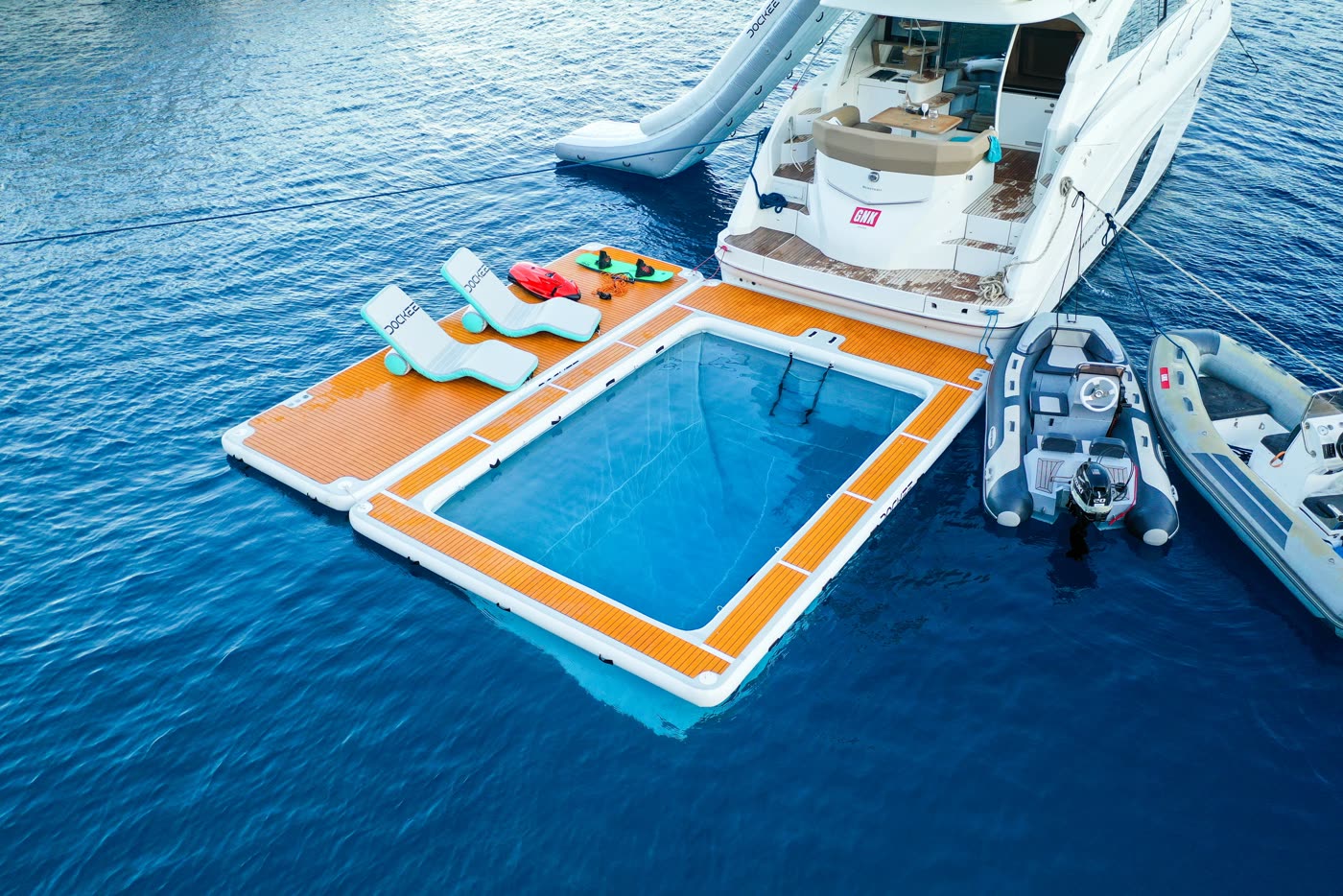
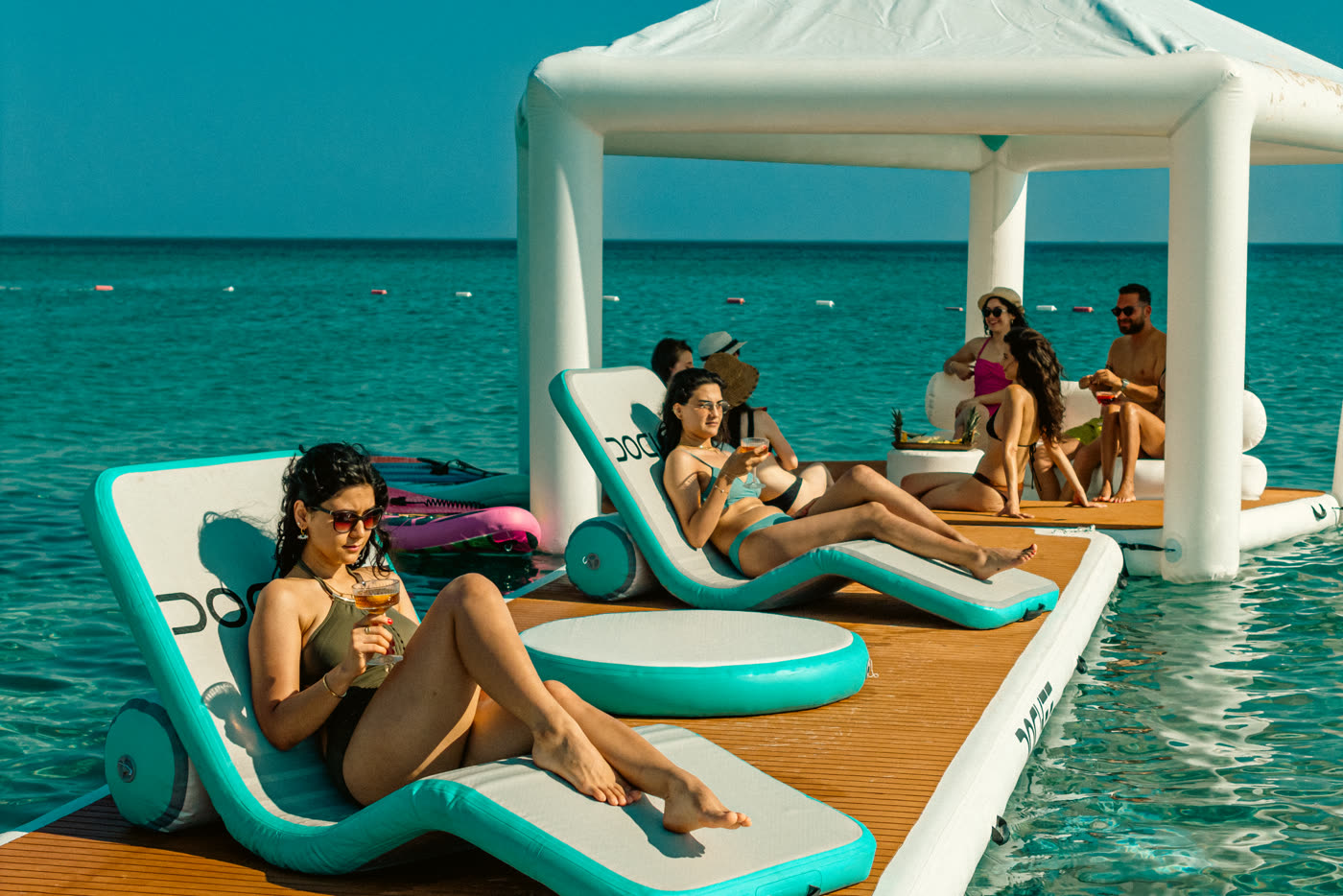
Next to the slide, a Premium Teak Platform 4.10 m gives swimmers somewhere to climb out and catch their breath. Its 410 x 205 cm deck has room for the whole party to sit, drop-stitch fabric and 0.9 mm PVC keep it flat with people climbing on and off, and the non-slip teak-look surface holds wet feet well. In the Ionian shallows the same platform becomes a sunbathing deck floating over pale sand, which is about as good as the Salento gets.
In November most charter yachts are tucked up for the winter, and the coast belongs to fishermen and the odd cruising boat heading south. It is a good time to walk the walls of Otranto, eat the morning's catch at a trattoria above the slip in Tricase Porto and decide which coves you want for next summer. When the season comes back, the two seas will still be there, and so will the lee.