The Italian islands that make the easiest day trip by boat are the ones close to the mainland: Ischia from the Bay of Naples, Giglio from Monte Argentario and the Tremiti from the Gargano. Each is near enough to reach in the morning, see properly and leave with daylight to spare, as long as you plan the way back before you plan anything else.
That matters more at this time of year. The days are short, the ferries have moved to their winter timetables and many island restaurants have closed for the season, so a day out asks for a little more self-sufficiency than it did in August.
Islands close to the coast
Ischia sits across the bay from Naples and Pozzuoli, with Procida in between if you want a shorter hop. It is lived in all year, so even late in the season you will find a bar open at Ischia Ponte below the Castello Aragonese, and the south side around Sant'Angelo gives shelter when the wind comes from the north.
Giglio lies off Porto Santo Stefano on Monte Argentario, inside the Tuscan Archipelago National Park. Giglio Porto is a small harbour of painted houses, and on the far side the long bay at Campese faces the sunset. Out of season the island is very quiet, which is much of its charm, and the clear water over granite is still there for a swim on a warm day.
The Tremiti are a small group off the Gargano coast, reached from Termoli, Rodi Garganico or Vieste. San Nicola carries the old abbey on its cliff, San Domino the pine woods and the coves. The islands form a marine reserve with zones where anchoring and fishing are limited, so read the local rules before you choose a spot. In winter nearly everything on the islands closes, and the crossing is best kept for a settled spell of weather.
Planning the way back first
The open water between the mainland and an island is where a pleasant morning turns into a long afternoon. In summer the sea breeze builds after lunch and throws up a short chop on the run home. Late in the year it is more often a front arriving earlier than forecast, or simply the dark coming sooner than you expected. Work backwards. Decide the latest time you want to leave the island, check the forecast for that hour as well as for the morning, and treat it as a fixed appointment.
Choose an anchorage on the side of the island sheltered from the wind you expect, and know where you would move if it shifts. If the crossing home looks unpleasant from the anchorage, it will be worse halfway across. If you plan to put a deck in the water, the mooring section of our buying guide explains how to connect and tie it off safely.
What to bring for the day
Bring food and water as if nothing will be open, because often nothing will be. Bring a warm layer for the ride back, when the air cools fast once the sun drops. And bring something that turns the boat into a place to stay for the afternoon rather than just a way of getting there.
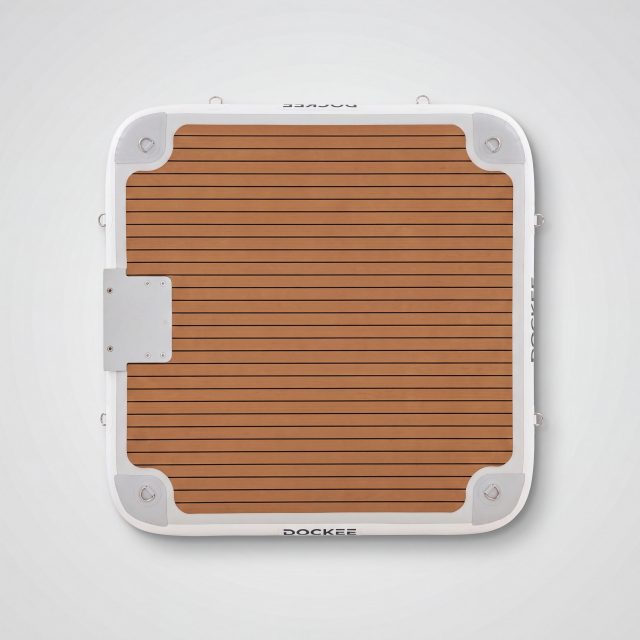
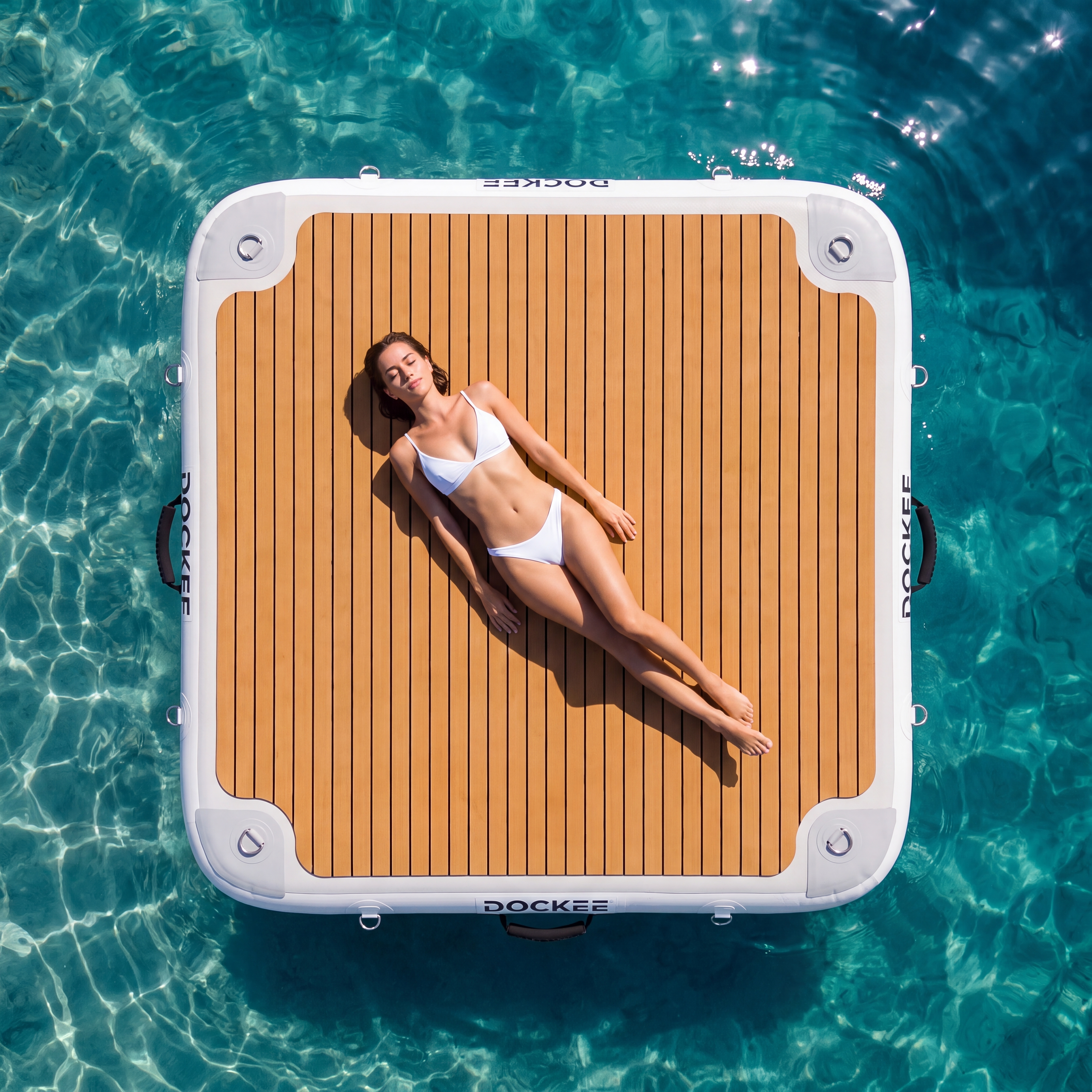
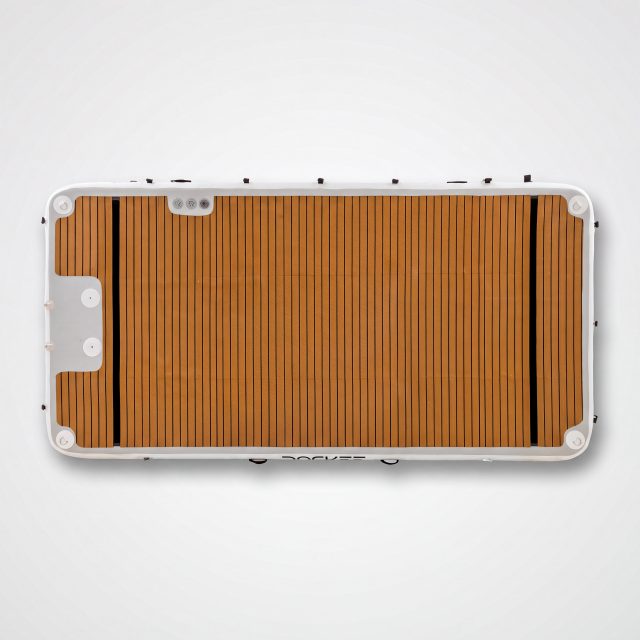
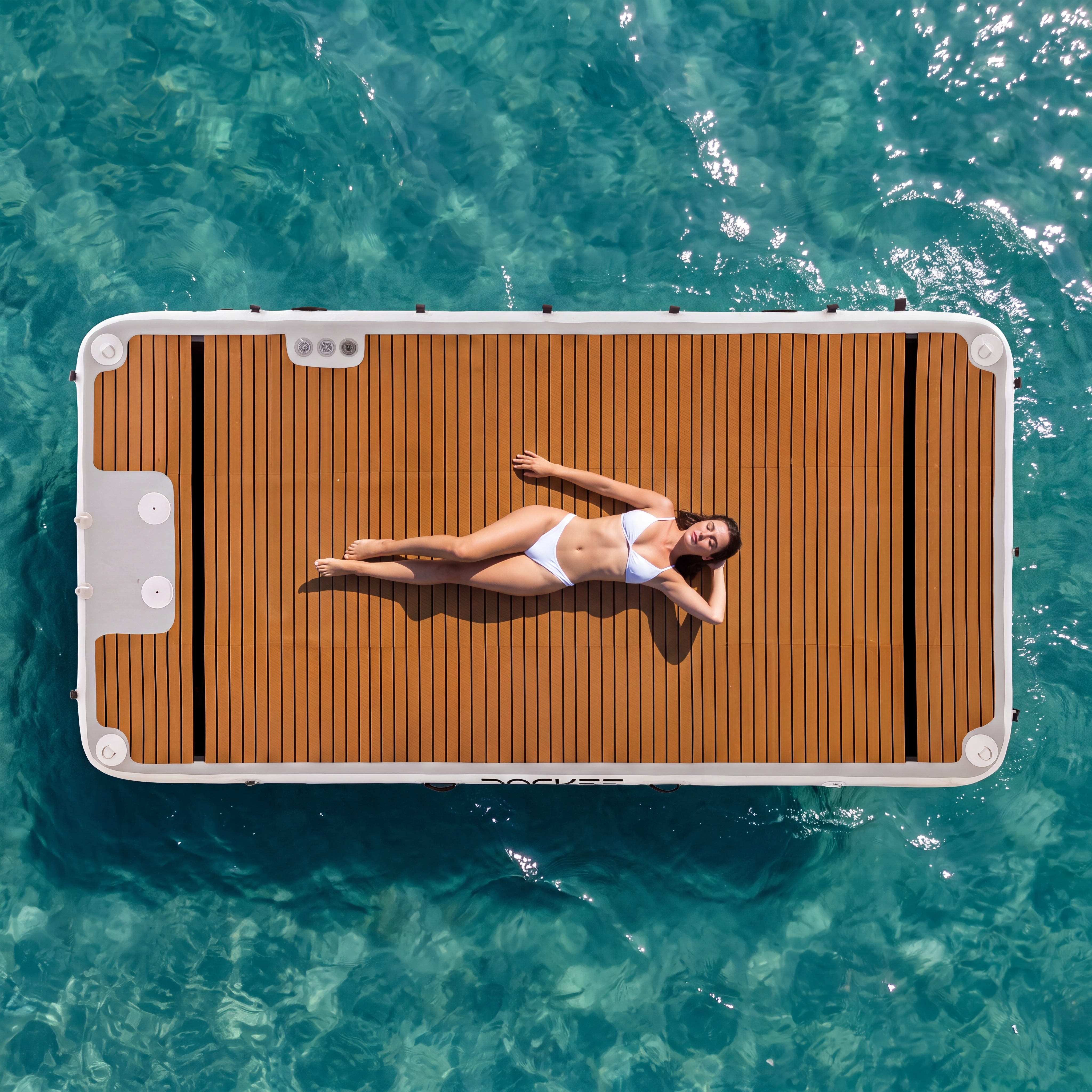
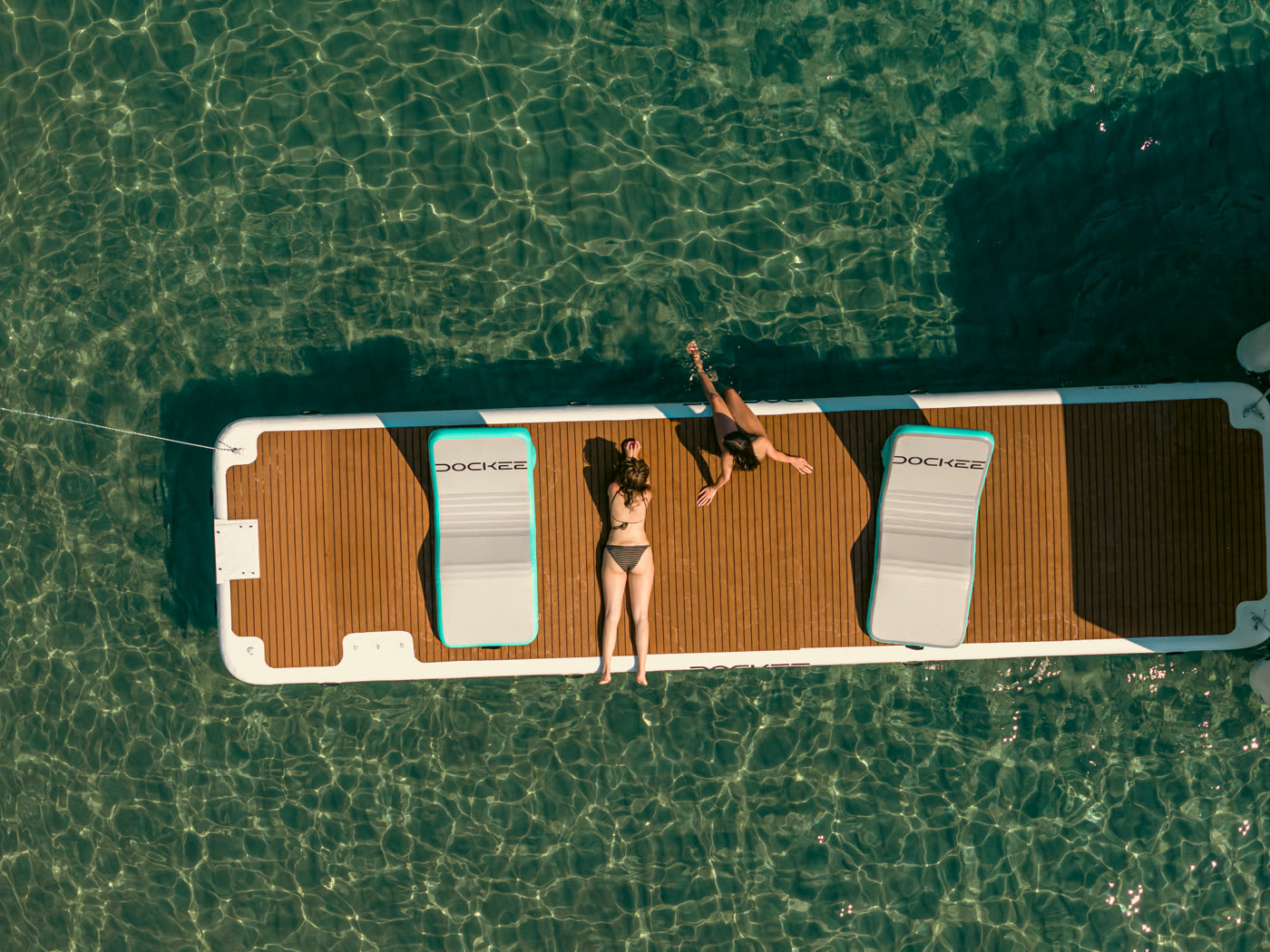
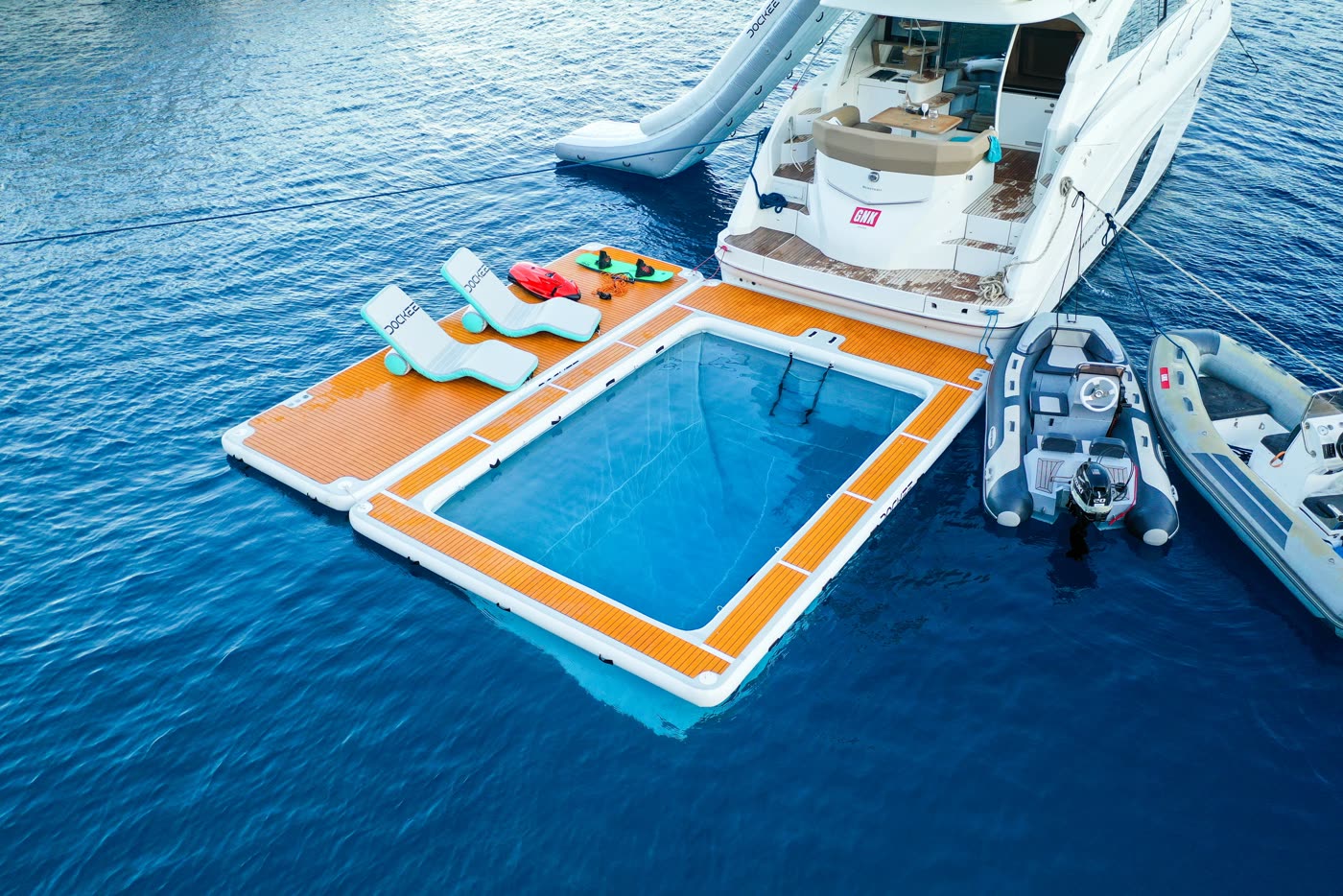
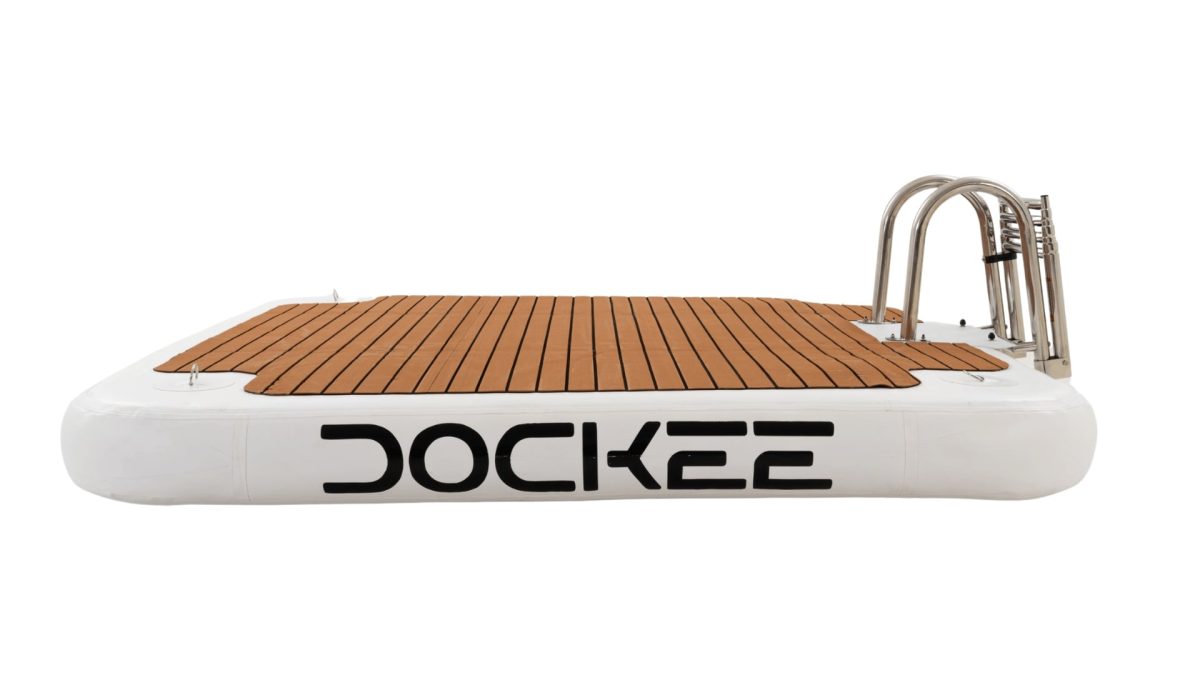
On a day boat or a small motor yacht that means a deck that packs small. The Premium Teak Platform 2.05 m is a square of 205 x 205 cm once inflated, yet it folds into a bag that fits a modest locker. Its 0.9 mm PVC and drop-stitch build keeps it firm underfoot, the non-slip teak-look surface grips even when wet, and once it is tied off the stern it gives swimmers a place to climb out and sit in the sun. On a larger yacht with room to spare, the Premium Teak Platform 4.10 m at 410 x 205 cm gives the whole party space to spread out. Both are in our platform range.
Whichever you take, the rules are the same as at any anchorage: calm, sheltered water, engines and thrusters off while anyone is swimming, and someone watching the swimmers, especially children. Then leave on time, even when the light is beautiful and nobody wants to go.